Our Services
Data Center Decommissioning
End-to-end project coordination for full facility wind-downs — racks, servers, storage, and networking removed, destroyed, and documented under a single chain of custody. One vendor. One point of contact. Complete compliance documentation at the end.
Schedule a Decommission AssessmentWhat we do
One vendor for everything — from the first rack to the final report
A data center decommission involves coordinating physical de-installation, secure transport, certified data destruction, asset disposition, and compliance documentation — often under time pressure, sometimes across multiple locations.
Using separate vendors for different parts of that process creates custody gaps, coordination problems, and documentation inconsistencies that surface during audits at the worst possible time.
Prime Asset Recovery manages the full scope under a single engagement. We handle de-installation, transport, data destruction, asset valuation, and reporting under one chain of custody. You have one point of contact throughout, and one complete set of documentation at the end.
We have managed decommissions ranging from single server rooms to multi-rack enterprise data centers, across healthcare, distribution, and financial services environments.
Every engagement includes
- On-site de-installation and cable management
- Rack-level and asset-level inventory documentation
- Servers, storage, and networking removal
- Battery backup, UPS, and power infrastructure
- Certified data destruction for all media types
- Serialized certificate of destruction per device
- Recovery value assessment and buyback
- Final asset report and compliance documentation package
In the field
Decommissioning at scale, tracked at the asset level
Every server, sled, and storage node leaves the client site with a serialized chain-of-custody record. Equipment is staged, labeled, and photographed at intake — then processed for secure data destruction, remarketing, or R2-certified downstream recycling.
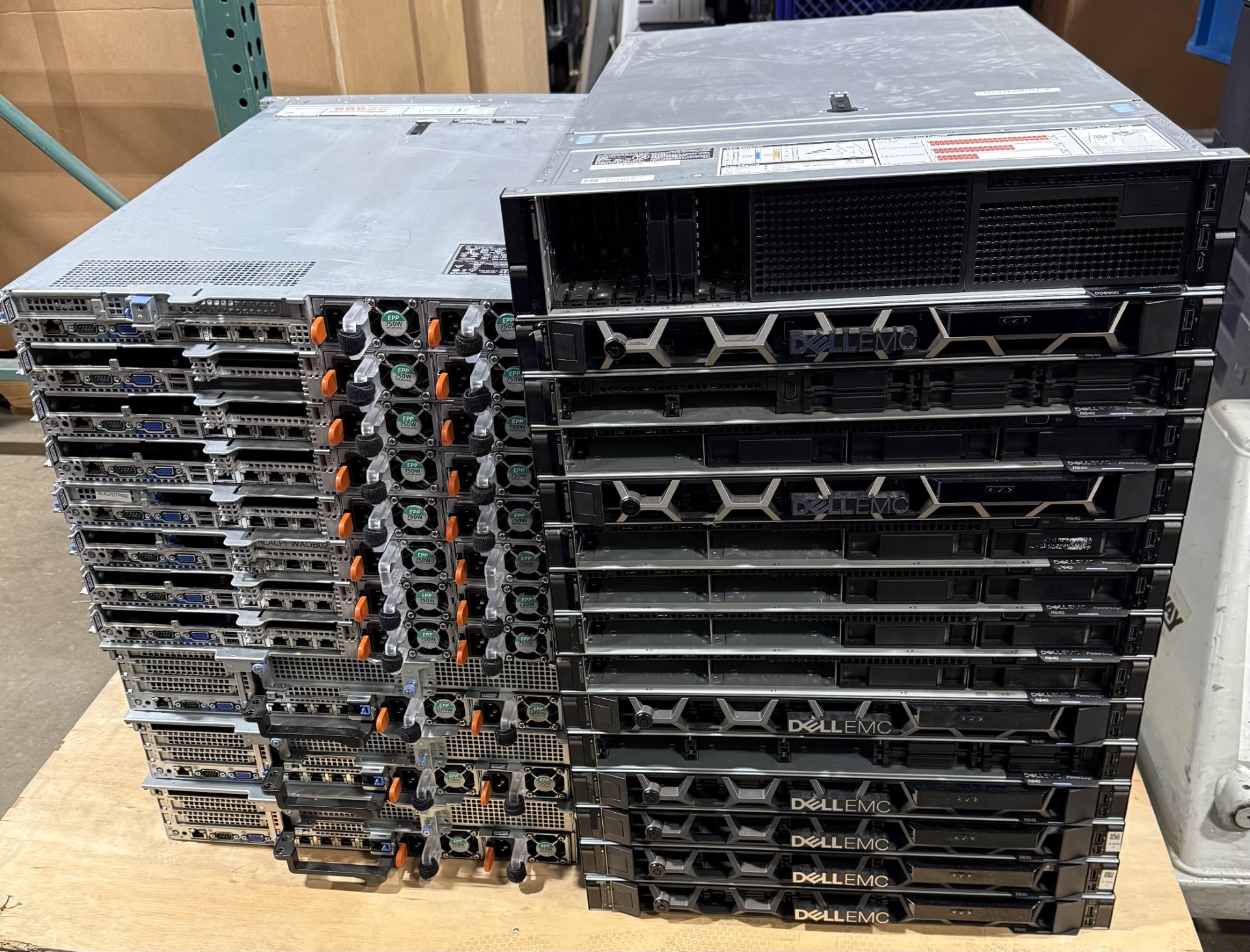
Mixed enterprise stacks staged for processing
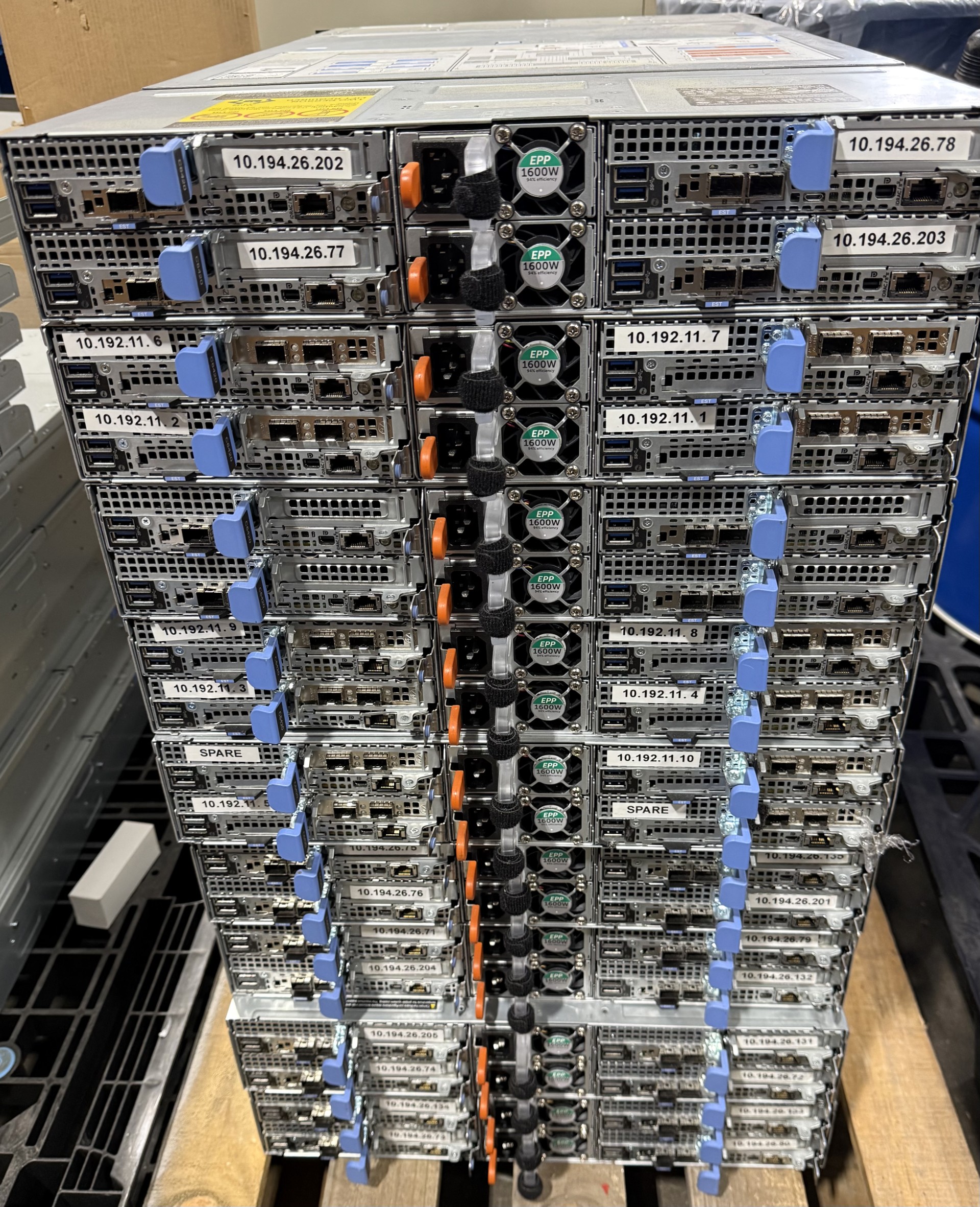
Asset-tagged nodes ready for secure data destruction
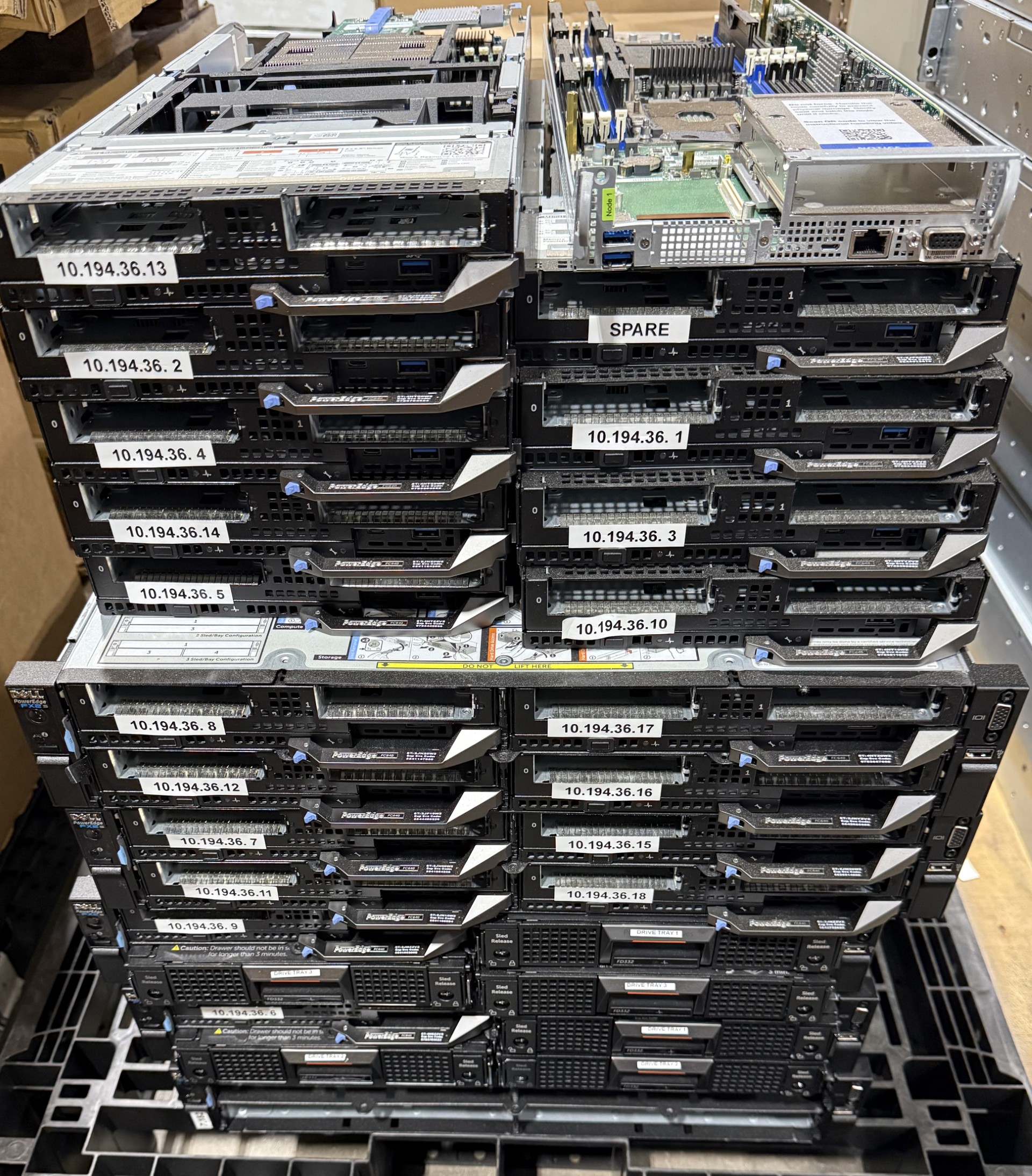
Blade and modular chassis received for retirement
How it works
Every decommission, the same six-stage process
From initial scoping through final reporting, every project follows the same documented sequence — so you know exactly what happens, when it happens, and what you receive at each stage.
Scoping & planning
On-site walkthrough to inventory assets, assess access logistics, identify environmental considerations, and confirm timeline. We deliver a written project plan before work begins.
Asset inventory
Every asset cataloged by make, model, and serial number before anything is moved. Chain of custody documentation begins at this step and continues through final destruction.
De-installation
Coordinated physical removal of servers, storage arrays, networking equipment, racks, cabling, and supporting infrastructure. Performed by trained technicians, not general movers.
Secure transport
Equipment transported in our own vehicles directly to our secure Marietta, GA processing facility. No third-party transfers. Signed pickup manifest issued at collection.
Data destruction
All data-bearing media destroyed at our facility — never outsourced. Serialized certificate of destruction issued for every device, suitable for HIPAA, SOX, and PCI-DSS audits.
Reporting & recovery
Complete asset report delivered with all certificates of destruction, plus any buyback or recovery payment for equipment with residual market value. Delivered within 5 business days.
Why coordination matters
What goes wrong without a single vendor
When decommissions are split across multiple vendors, the gaps between them are where compliance failures, asset loss, and timeline overruns happen.
Timeline pressure
Lease expirations, hardware refresh cycles, and facility closures rarely allow for delays. Vendors who do not control the full scope frequently miss deadlines because one phase depends on another that did not finish on time.
Documentation gaps
When the de-installation vendor hands off to a separate destruction vendor, asset records often do not transfer cleanly. Auditors find missing serial numbers, mismatched manifests, and unaccounted devices.
Lost asset value
Equipment with significant resale value often gets bundled into bulk recycling because no one in the chain is incentivized to identify it. We assess every asset for recovery value as part of the standard process.
Client engagements
Decommissions we have managed
Industrial distribution company — complete on-premise data center
Full decommission of an on-premise data center as the company migrated to cloud infrastructure. 14 racks of servers, storage, and networking equipment. Coordinated removal over a single weekend to avoid business disruption, with all data-bearing media destroyed at our facility and serialized CODs delivered the following week.
Multi-location healthcare group — structured infrastructure retirement
Phased retirement of legacy infrastructure across multiple facilities for a regional healthcare group. HIPAA-compliant chain of custody documentation throughout, with destruction certificates indexed by location for the client compliance records.
Frequently asked
Common decommissioning questions
Do you service companies outside the Atlanta area?
We run our own trucks throughout metro Atlanta and the Southeast. For projects outside our direct service area we coordinate through vetted logistics partners with the same documentation standards. We can support larger decommission projects nationally.
Is there a minimum engagement size?
There is no minimum. We handle single-location pickups with a handful of devices the same way we handle full data center decommissions. Every engagement regardless of size receives the same documentation and destruction standards.
How quickly can you schedule a decommission?
Most engagements are scoped and scheduled within the week of first contact. For urgent situations — lease expirations, facility closures — we can often accommodate faster timelines. Call us directly at (404) 263-2935.
What documentation do I receive?
You receive a signed pickup manifest at collection documenting every asset by serial number, make, and model. On completion you receive a serialized certificate of destruction for every data-bearing device and a full asset report. All documentation is suitable for HIPAA, SOX, and PCI-DSS audits.
Do you support HIPAA-compliant disposal for healthcare organizations?
Yes. We have experience working with healthcare organizations and understand the documentation requirements for PHI-bearing media. Our serialized per-device certificates of destruction are designed to support HIPAA compliance requirements.
What happens to equipment that still has resale value?
We assess every asset for current market value. Equipment with resale value is processed through our remarketing channels and the recovery amount is returned to you via direct buyback or revenue share. Many clients receive a payment rather than an invoice.
Request an assessment
Tell us what you have
Equipment types, approximate quantity, and location. We confirm scope and logistics, then get it scheduled — most engagements are on the calendar within the week.
Ready to get started
Schedule a decommission assessment
Tell us the scope — number of racks, locations, timeline, and any compliance requirements. We will assess the project, confirm logistics, and give you a clear picture of what is involved.
Most decommission assessments are completed within one business day of first contact.
Request a Decommission AssessmentOr call us directly: (404) 263-2935 — we answer during business hours and there is no sales process involved.
What to have ready
- Approximate number of racks or devices
- Location(s) and access requirements
- Target completion date or hard deadline
- Compliance framework (HIPAA, SOX, PCI-DSS, etc.)
- Any equipment you believe may have resale value